What Is Kamikaze Marketing?

Kamikaze marketing is a bold strategic tactic where companies deliberately launch a product they know will fail, with the goal of sabotaging a competitor's market share. It's a calculated sacrifice - a product is introduced, not to succeed, but to create confusion or dilute the appeal of a rival's offering. The classic example is Coca-Cola's launch of Tab Clear, a transparent diet drink, in response to Pepsi's Crystal Pepsi. Though Tab Clear flopped, it was a strategic move by Coca-Cola to undermine Crystal Pepsi. If you'd like to learn more about this complex and audacious marketing maneuver, keep reading.
Defining Kamikaze Marketing
Although the term "kamikaze marketing" may sound dramatic, it refers to a strategic tactic where companies deliberately launch a product with the primary aim of sabotaging a competitor's market share. This is a calculated sacrifice, where a company introduces a product designed to fail in order to create confusion or dilute the appeal of a rival's offering.
A prime example is Coca-Cola's introduction of Tab Clear in response to Pepsi's launch of Crystal Pepsi. Coca-Cola's kamikaze defense was intended to speed up Crystal Pepsi's downfall by associating it with an intentionally unpleasant product. This highlights the importance of understanding the broader market impacts beyond a single campaign and the nuanced art of brand positioning and strategic planning.
Kamikaze marketing underlines the complexity of consumer behavior, as companies may target health and weight-conscious consumers with a product launch that is ultimately meant to undermine a competitor's market share. This strategic tactic challenges the traditional notions of marketing success and the long-term implications of a product launch.
Coca-Cola's Strategic Sacrifice
In the early 1980s, Coca-Cola faced a significant decline in market share as Pepsi increasingly outsold Coke in supermarkets, prompting the introduction of the ill-fated New Coke in 1985. However, the reintroduction of the original Coca-Cola formula, rebranded as Coca-Cola Classic, resulted in a sales increase.
Coca-Cola's kamikaze marketing strategy then involved the introduction of Tab Clear, a transparent version of the diet drink Tab, which was deliberately designed to fail. This was part of a strategy to confuse consumers and affect the perception of Crystal Pepsi, Pepsi's clear cola competitor. The failure of Tab Clear did not negatively impact Coca-Cola's overall brand image, as it was intended to sabotage the success of Crystal Pepsi. Ultimately, Coca-Cola's kamikaze defense strategy against Crystal Pepsi, which involved intentionally marketing Tab Clear as a bad product, contributed to the market failure of both products within six months.
The Rise of Crystal Pepsi
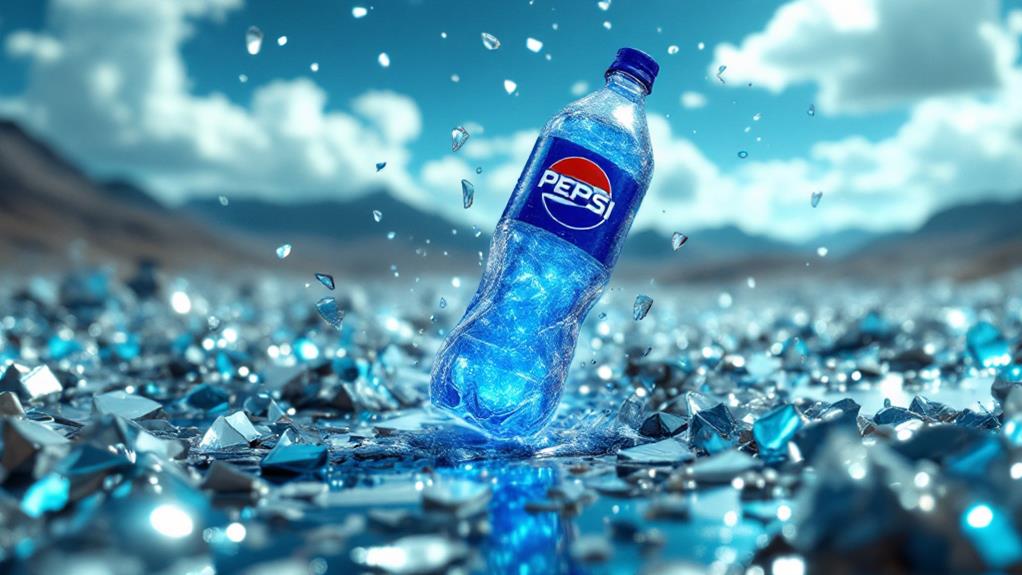
As the clear beverage trend gained momentum, PepsiCo capitalized on this shift by introducing Crystal Pepsi in 1992. The unique positioning and consumers' perception of clarity equating to purity contributed to Crystal Pepsi's initial success, with it being named the Best New Product of 1992. However, this clear soda was short-lived, as it quickly captured only 1% of the US soft drink market, equivalent to approximately $474 million in sales.
The rise of Crystal Pepsi was met with Coca-Cola's strategic sacrifice, as they introduced Tab Clear in an effort to eliminate the competition. This "designed to fail" tactic was a conscious decision by Coca-Cola to erode Crystal Pepsi's market share. Ultimately, Crystal Pepsi's lifespan was limited to just five months, joining the ranks of other "miserable failures" like 7up Gold and Pepsi Blue. The broader cultural impact of these product launches, however, is evident in the fact that the 7up Gold commercial served as a launching pad for Kevin Gass, a member of the band Tenacious D.
Coca-Cola's Kamikaze Response
Coca-Cola wasted no time in responding to the rise of Crystal Pepsi. They introduced Tab Clear, a transparent version of the diet drink Tab, as a strategic marketing tactic to sabotage Crystal Pepsi's success and confuse consumers. Tab Clear was deliberately designed to fail, as part of Coca-Cola's "kamikaze marketing" effort to blur the lines between traditional colas and diet drinks, undermining the perception of Crystal Pepsi.
Although Coca-Cola spent millions on advertisements for Tab Clear, they did not believe in the product. The primary goal was to eliminate the competing Crystal Pepsi brand. The failure of Tab Clear was considered a strategic move, as it did not negatively impact the overall brand image of Coca-Cola. Ultimately, the introduction of Tab Clear, along with Coca-Cola's marketing strategy, contributed to the downfall of both Crystal Pepsi and Tab Clear within six months of Tab Clear's launch.
The Aftermath of Failure

The aftermath of Coca-Cola's kamikaze marketing effort against Crystal Pepsi was swift and decisive. With the demise of both Crystal Pepsi and Tab Clear, Coca-Cola's aggressive behavior was eroding its reputation. Consumers' preferences towards diet drinks had shifted, and the company's tactics highlighted a change in consumer behavior.
To join or sign up for the latest updates on this topic, click Continue to join Coca-Cola's LinkedIn page and review their User Agreement. Blind taste tests showed that despite Crystal Pepsi's initial success, the market had become increasingly crowded and unpredictable. The failure of these high-profile products underscored the challenges of maintaining a competitive edge in the constantly mutating soft drink industry.
The kamikaze marketing strategy employed by Coca-Cola had backfired, costing the company millions and damaging its brand image. As the industry moved forward, Coca-Cola would need to reevaluate its approach and focus on understanding consumer preferences to regain its footing.
Embracing Audacity in Marketing
Embracing audacity in marketing is no easy feat, but the payoffs can be immense. Coca-Cola's introduction of TAB Clear, a transparent diet drink aimed at undermining Pepsi's Crystal Pepsi, exemplifies this bold move. Analysts noted a shift in the world of marketing, particularly among baby boomers, where the celebration of strategic risk-taking was welcomed.
The willingness to embrace strategic sacrifices, like Coca-Cola's expenditure of millions on ads for the unpopular TAB Clear, is a hallmark of kamikaze marketing's disruptive approach. This defiance of conventional wisdom in the soft drink and non-cola diet drink industry mirrors the audacious spirit of World War II's kamikaze pilots.
Kamikaze marketing thrives on creativity and unpredictability, as seen in Coca-Cola's ability to turn Crystal Pepsi's initial success into a short-lived failure. The power of strategic risk-taking is emphasized by Pepsi's commemorative efforts around the 30-year anniversary of Crystal Pepsi, a representation of the mutable nature of the marketing landscape.