What Are Examples of a Bad Marketing Moments?

You've likely seen your share of cringe-worthy marketing campaigns, from Kendall Jenner's Pepsi ad that trivialized social justice movements to Burger King's regrettable International Women's Day tweet. These marketing missteps demonstrate the importance of cultural awareness and avoiding the promotion of harmful stereotypes. Other examples include Audi's objectifying wedding commercial and Snapchat's problematic "Would You Rather" filter. Brands must be proactive in nurturing a culture of diversity, equity, and respect. Immerse yourself to investigate more cautionary tales of marketing gone wrong and the lessons they hold for companies seeking to connect authentically with consumers.
Kendall Jenner's Pepsi Ad Controversy
One of the most notorious examples of bad marketing moments was Kendall Jenner's 2017 Pepsi ad. The marketing campaign aimed to promote global unity, peace, and understanding, but it spectacularly missed the mark. Featuring Kendall Jenner joining a protest march and resolving tensions by handing a Pepsi to a police officer, the ad was widely criticized for trivializing the real-world struggles of the Black Lives Matter movement. Accused of making the protest seem like a fun party, the backlash against the insensitive ad was swift and severe. Pepsi quickly pulled the ad and issued an apology, acknowledging they had neglected to ponder the implications and potential impact on marginalized communities. The controversy became a cautionary tale in the importance of social responsibility in marketing, with the resignation of Pepsi's president of global beverage group underscoring the high stakes of such marketing failures. The Kendall Jenner Pepsi ad remains a prime example of how even well-intentioned campaigns can backfire when they fail to authentically address complex social issues.
Gap's Failed Logo Redesign
In 2010, Gap, the renowned clothing retailer, decided to revamp its iconic logo in a bold move to modernize its brand image. The new logo, featuring a black, bold font and a blue square design, was meant to shift the brand from its classic, American aesthetic to a more modern, sexy, and cool vibe. However, this marketing campaign backfired spectacularly.
- The logo redesign was immediately rejected by consumers, leading to a satirical Twitter feed and website mocking the new design.
- Gap tried to turn the logo redesign into a crowd-sourcing project, but it did not go over well with the public.
- The backlash against the new logo was so severe that Gap reverted to its old logo within just six days.
- The failed logo redesign highlighted the importance of carefully considering consumer opinions and brand identity when making major changes.
- The debacle underscored the risks of abandoning a brand's classic design in favor of a more modern approach without thorough market research.
Burger King's International Women's Day Tweet
The Burger King UK division sparked outrage on social media with its insensitive tweet for International Women's Day. The tweet, which stated "Women belong in the kitchen," was part of a marketing campaign aimed at promoting a scholarship program. However, the initial message was widely perceived as misogynistic, leading to widespread criticism. The incident highlighted the importance of careful market research and consideration of potential perceptions when launching a marketing campaign, especially around sensitive social issues like gender equality.
The backlash was amplified by the fact that many social media users never saw the follow-up tweets explaining the scholarship program, focusing solely on the initial controversial statement. This emphasizes the need for a cohesive and well-thought-out marketing strategy that accounts for the potential impact on target audiences. The Burger King incident serves as a cautionary tale for brands, reminding them to prioritize inclusivity and social responsibility in their marketing efforts, lest they face the consequences of a major public relations disaster on social media.
Audi's Objectifying Wedding Commercial
Audi's wedding commercial took a problematic turn, featuring a bride undergoing an inspection by the groom's mother - a scene that many perceived as objectifying women and reducing their worth to that of a mere vehicle. This marketing misstep drew significant backlash worldwide, with calls for a boycott of the brand. The incident highlighted the importance of carefully considering the impact of advertising campaigns and avoiding messaging that reinforces harmful stereotypes.
- The commercial was criticized for promoting the idea that a woman's value is tied to her appearance, rather than her character or capabilities.
- Audi acknowledged the ad did not align with the company's values and promptly withdrew it after receiving widespread criticism.
- This cautionary tale serves as a reminder for brands to be mindful of societal perceptions and guarantee their marketing aligns with their stated principles.
- Effective communication and inclusive representation are pivotal in crafting advertisements that resonate positively with the target audience.
- Brands must be proactive in nurturing a culture of diversity, equity, and respect to avoid such objectifying marketing blunders.
American Airlines' Unlimited First-Class Program

American Airlines' ambitious foray into an unlimited first-class travel program, called AAirpass, soon proved to be a double-edged sword for the airline. Introduced in the early 1980s for a steep $250,000, the AAirpass was meant to raise capital during a financially challenging period. However, some AAirpass holders exploited the program's lack of restrictions, using it excessively and costing the airline millions of dollars. Frustrated by the significant financial losses, American Airlines eventually sued and terminated the AAirpass program. This fiasco serves as a cautionary tale for companies seeking to enthrall customers through new ad campaigns and social media strategies. Like Audi's objectifying wedding commercial and Pepsi's wrong approach with Kendall Jenner, American Airlines' AAirpass program is another example of Biggest Marketing Fails, where a well-intentioned initiative backfired due to poor planning and oversight. The lack of restrictions on the AAirpass program allowed it to be exploited by savvy AAirpass holders, leading to its eventual downfall.
Snapchat's Harmful "Would You Rather" Filter
Snapchat sparked significant backlash when it presented a "Would You Rather" filter that allowed users to compare themselves to various demeaning stereotypes, including options related to domestic violence. This marketing misstep highlighted the importance of carefully considering the impact of content and avoiding the promotion of harmful stereotypes or behaviors.
The incident serves as an esteemed lesson for social media platforms to be more mindful of the potential consequences of their marketing campaigns and product launches. Some key takeaways include:
- The need to thoroughly vet marketing ideas for potential negative impact
- The importance of avoiding harmful stereotypes in campaign advertising
- The risk of significant backlash from users when platforms make insensitive decisions
- The requirement for social media platforms to prioritize user well-being over engagement
- The worth of making important decisions with the utmost care and consideration.
Snapchat's removal of the filter and subsequent apology demonstrate the need for brands to learn from such mistakes and be more responsible in their approach to content and features.
McDonald's Shamrock Shake Misconception
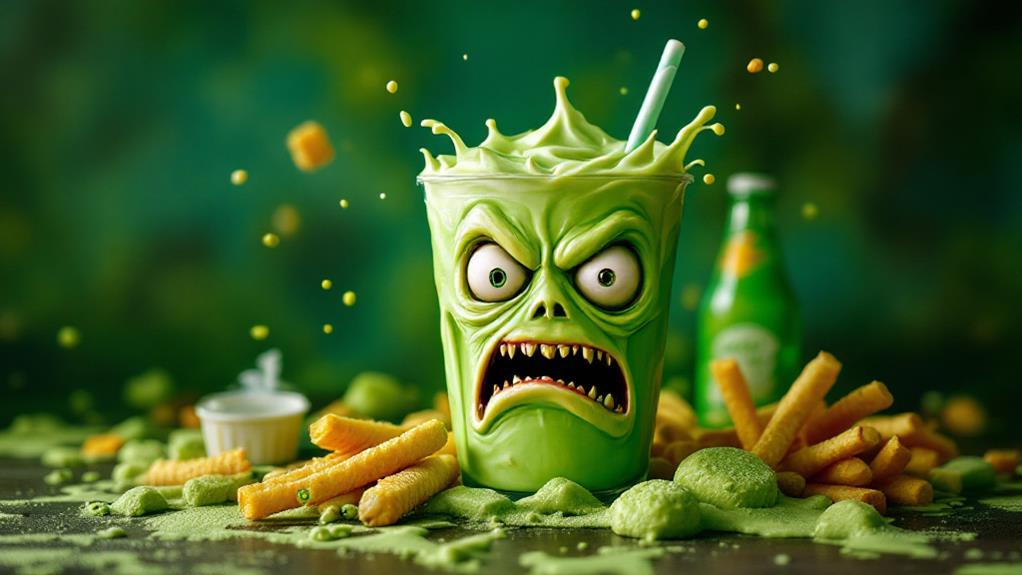
Introduced in 1970 for St. Patrick's Day, McDonald's Shamrock Shake led to misconceptions that it contained real shamrocks, which it did not. The green color of the shake caused confusion among customers, leading them to believe the shake was made with the iconic Irish plant. This misconception forced McDonald's to clarify the shake's ingredients, highlighting the absence of shamrocks.
The popularity of the Shamrock Shake created high demand, but the disappointment over its non-shamrock composition led to backlash from some customers. This incident emphasized the importance of transparent communication from McDonald's, especially for seasonal and limited-time menu items.
The Shamrock Shake case demonstrates how a lack of clarity around product ingredients can erode customer trust. Moving forward, McDonald's and other brands must prioritize transparency to avoid similar misconceptions and guarantee customers are fully informed about what they're consuming, even for temporary menu offerings.
Pepsi's "Live for Now" Protest-Themed Ad
Pepsi's 2017 "Live for Now Moments Anthem" ad sparked widespread criticism for its tone-deaf attempt to capitalize on social justice movements. The ad featured Kendall Jenner joining a protest and handing a Pepsi to a police officer, which was perceived as trivializing the real-world struggles of marginalized communities, particularly the Black Lives Matter movement.
The backlash on social media was swift, with many accusing Pepsi of minimizing important social issues for commercial gain. The company quickly pulled the ad and issued an apology, acknowledging that they had "missed the mark" in their effort to promote a message of global unity and understanding.
The "Live for Now" campaign fiasco became a case study in the importance of considering the cultural and social milieu when creating marketing content:
- Pepsi failed to grasp the gravity of the Black Lives Matter movement
- The ad was criticized for its simplistic and insensitive portrayal of protest
- Pepsi was accused of exploiting social justice for profit
- The backlash highlighted the risks of trivializing important issues
- The incident underscored the need for greater cultural awareness in marketing.