Houston’s Business Hubs: Where Entrepreneurs Network and Thrive
Houston offers diverse entrepreneurial spaces where you'll find rich networking opportunities across university-driven hubs like Rice’s Ion District, industry-specific networks, and inclusive community spaces.
You can tap into hundreds of millions in early-stage funding through angel networks and venture firms, with resources designed for minority and women entrepreneurs. The city's public–private partnerships, including the Greater Houston Partnership (GHP), provide additional pathways to help your business concept become reality.
The Rise of Inclusive Entrepreneurial Spaces in Houston
https://www.youtube.com/watch?v=GOYmSUyqoRQ
As Houston’s region continued to grow significantly in 2024—Harris County alone added about 106,000 residents year over year, the most of any U.S. county—the city has witnessed a corresponding rise in inclusive entrepreneurial spaces designed to serve its increasingly diverse business community. These hubs reflect Houston’s cultural richness, focusing on supporting minority, women, and immigrant entrepreneurs through culturally conscious mentoring programs.
Despite some mixed signals in new-business formation in early 2025, the market remains dynamic with ongoing expansion projects creating opportunities for underrepresented founders. The overall business landscape has stayed resilient compared to the prior year.
Diverse startup accelerators have emerged across the city, providing tailored resources that address specific challenges faced by varied demographic groups.
You’ll find these spaces actively bridging gaps in traditional business ecosystems, creating environments where entrepreneurs from all backgrounds can access essential networks and resources for sustainable growth.
Houston’s University-Driven Innovation Districts
View this post on Instagram
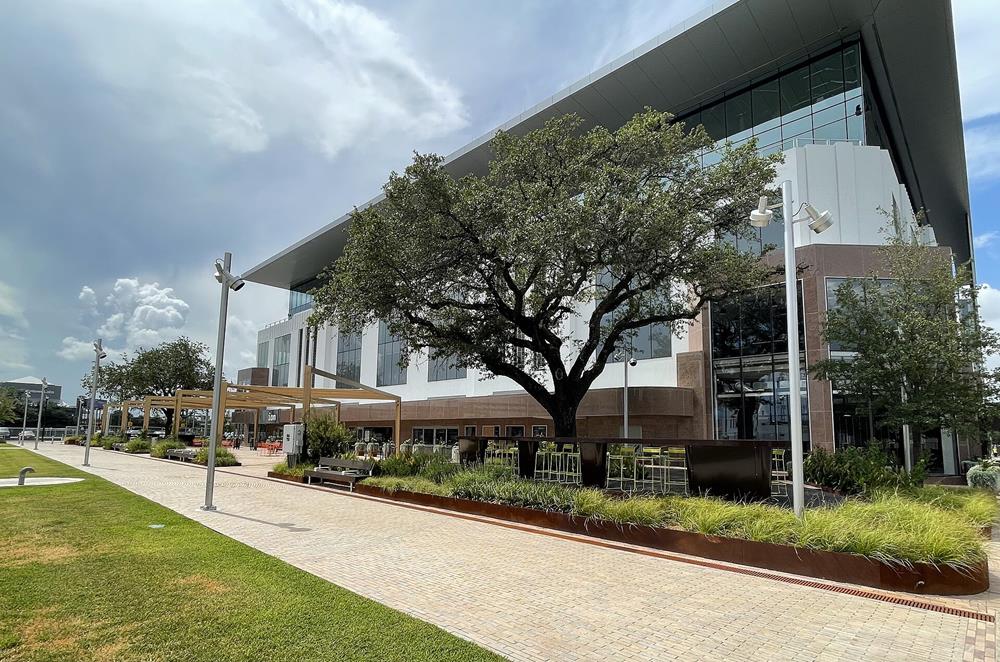
Building on the city’s inclusive entrepreneurial landscape, Houston’s academic institutions have become powerful catalysts for innovation and economic growth. You’ll find Rice University leading this charge with the 16-acre Ion District in Midtown Houston, where technology collaboration thrives in a repurposed Sears building that reopened in 2021 after a ~$100 million renovation. The district exemplifies successful urban redevelopment strategies, spanning multiple walkable blocks designed for dense interaction between entrepreneurs, students, and corporations. Nearby, Greentown Labs Houston supports a ~70-member startup community in more than 30,000 square feet of prototyping lab, machine shop, electronics lab, and office/event space. These innovation hubs offer flexible workspaces, prototyping labs, and programming that connects academic research with industry needs—creating an ecosystem where your startup can access both university talent and corporate partnerships. When exploring Houston’s professional landscape, you’ll discover a tapestry of industry-specific networking hubs positioned throughout the metro. Young Professionals in Energy (YPE) runs a year-round calendar connecting energy professionals across 40+ chapters, and Texas Young Professionals (TYP) hosts recurring business-networking socials across the city. Impact Hub Houston serves social entrepreneurs with mentorship and a connection into Impact Hub’s global network of tens of thousands of members. Meanwhile, groups like ACG Houston Young Professionals convene middle-market finance operators and founders. For entrepreneurs, general-audience mixers such as Network After Work and sector meetups listed on Eventbrite round out the calendar, ensuring there’s a touchpoint for nearly every niche. How effectively can a city grow its economy without strategic collaboration between government and business? Houston’s answer is clear: it can’t. The Greater Houston Partnership functions as a chamber of commerce, economic development agency, and global advocate for an 11-county region. GHP’s One Houston Together initiative advances equity by mobilizing large employers around measurable inclusion goals and supplier diversity efforts. These partnerships have been central to downtown investment exceeding $6 billion since 2004, transforming the urban core with parks, hotels, residential towers, and cultural venues—momentum tracked in Downtown Houston’s public investment map and planning reports. While many cities struggle to democratize startup capital, Houston has cultivated a diverse funding ecosystem that’s increasingly accessible. PitchBook/NVCA data show Houston-area startups raised nearly $1.5 billion in venture capital in 2023, with recovery signs through 2024 and into early 2025. Beyond VC firms like Mercury Fund (which closed a $160 million Fund V), founders can tap Houston’s active angel community, including the GOOSE Society/GOOSE Capital, the Houston Angel Network, and university-affiliated angel groups. If you’re exploring alternatives to equity, local investors and corporate partners frequently highlight debt facilities, venture debt, and strategic corporate venture as complements to seed/Series A funding—trends reflected in recent Houston rounds. Government and nonprofit programs (e.g., SBA and city initiatives) add non-dilutive options, while crowdfunding remains a modest but available path within the region’s mix.Industry-Specific Networking Hubs Across the Metro Area
Public–Private Partnerships Fueling Business Growth
Accessing Capital: How Houston’s Funding Networks Support Diverse Founders
Related posts